

Due diligence can make or break your business sale. It’s the deep dive where buyers examine everything under your company’s hood: and where deals either close smoothly or fall apart spectacularly.
Whether you’re selling your family restaurant, manufacturing business, or retail operation, knowing what to do (and what not to do) during due diligence can save your deal and maximize your sale price.
Here’s your practical checklist to navigate due diligence like a pro.
The Do’s: Your Success Checklist
DO: Get Your Financial House in Perfect Order
Start with your numbers: they’re the first thing buyers will scrutinize.
Essential Financial Documentation:
- Clean financial statements for the past 3-5 years
- Tax returns (federal, state, local, payroll) for the same period
- Bank statements and reconciliations
- Accounts receivable and payable aging reports
- Cash flow projections with realistic assumptions
Real-world example: A local auto shop owner increased his sale price by 15% simply by having organized, audited financials that showed consistent profitability trends. The buyer’s confidence in the numbers eliminated weeks of back-and-forth.
Make sure your financial statements align with your tax returns. Discrepancies raise red flags immediately.
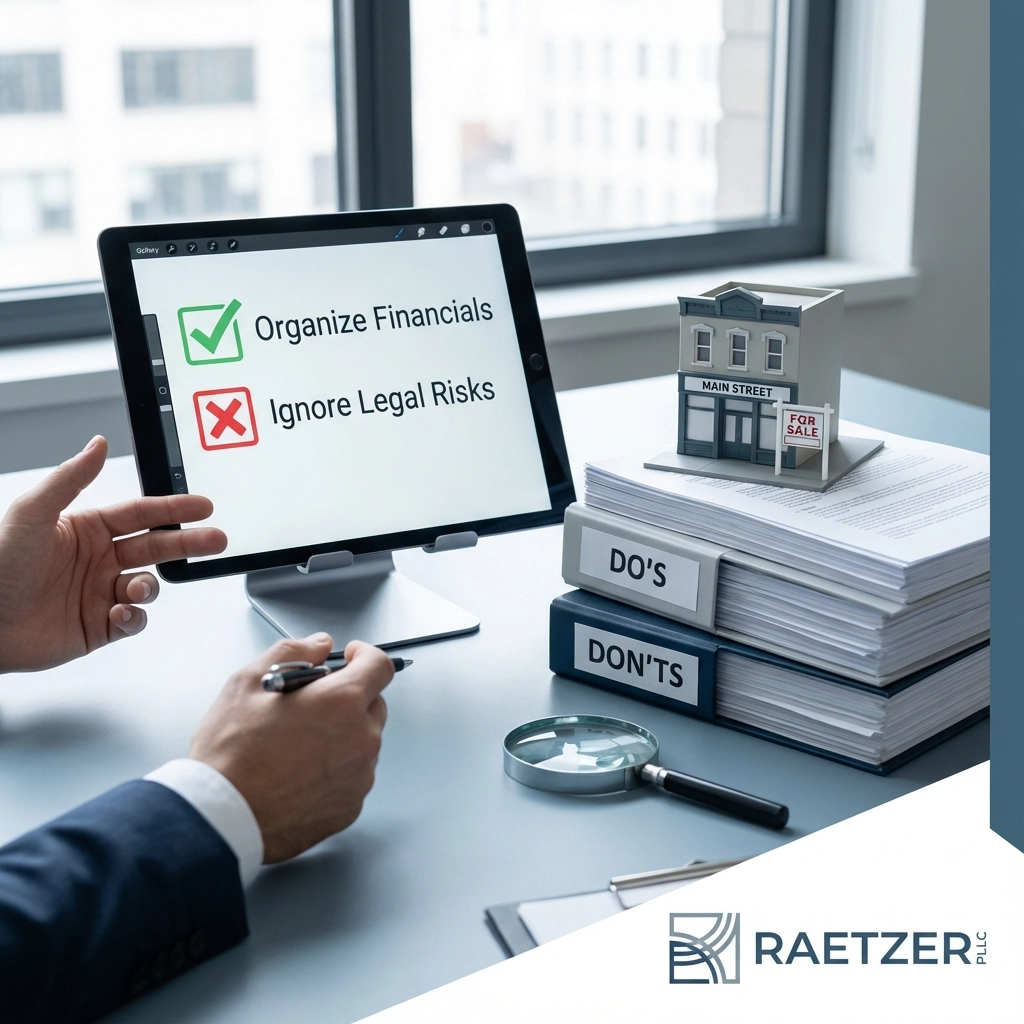
DO: Organize Your Legal Documents Early
Buyers want to see clean corporate governance and clear ownership.
Corporate Document Checklist:
- Articles of incorporation and bylaws
- Shareholder agreements and operating agreements
- Board meeting minutes (keep them current)
- Stock certificates and cap table
- Good standing certificates from your state
Contract Documentation:
- Customer contracts and service agreements
- Supplier and vendor contracts
- Lease agreements for property and equipment
- Employment contracts for key personnel
- Insurance policies and claims history
DO: Document Your Operations Thoroughly
Show buyers exactly how your business runs and why it’s valuable.
Operational Documentation:
- Customer lists with revenue breakdowns
- Product or service catalogs with pricing
- Standard operating procedures
- Key performance metrics and benchmarks
- Competitive analysis and market position
Pro tip: A family bakery that documented their secret recipes, supplier relationships, and customer loyalty programs sold for 2x their initial asking price because buyers could see exactly what made them special.
DO: Address Your People Strategy
Your employees are often your biggest asset: or your biggest risk.
HR Documentation Checklist:
- Employee handbook and policies
- Organizational chart with key roles
- Compensation plans and benefit summaries
- Performance reviews for key personnel
- Any pending HR issues or disputes
Retention Planning:
- Identify which employees are critical to operations
- Prepare retention bonuses or agreements
- Document institutional knowledge that could walk out the door

DO: Proactively Disclose Problems
Honesty builds trust and prevents deal-killing surprises later.
Common Disclosure Areas:
- Pending litigation or regulatory issues
- Environmental concerns or compliance violations
- Customer concentration risks (if 3+ customers represent 50%+ of revenue)
- Seasonal fluctuations or cyclical business patterns
- Recent employee departures or customer losses
Reality check: Buyers will find problems anyway. Disclosing them upfront with your plan to address them shows maturity and protects your credibility.
The Don’ts: Avoid These Deal-Killers
DON’T: Hide Financial Red Flags
Nothing destroys buyer confidence faster than discovering hidden problems.
Financial Don’ts:
- Don’t present financials that don’t match tax returns
- Don’t hide debt, liens, or contingent liabilities
- Don’t manipulate inventory or receivables before the sale
- Don’t use personal expenses to artificially inflate profits
- Don’t provide projections without solid supporting data
Cautionary tale: A restaurant owner tried to hide declining sales by booking future catering events as current revenue. When discovered, the buyer walked away entirely.
DON’T: Wing It on Documentation
Disorganized records signal potential problems lurking beneath the surface.
Documentation Don’ts:
- Don’t wait until the last minute to gather documents
- Don’t provide incomplete or outdated information
- Don’t rely on “I’ll find that later” responses
- Don’t use personal filing systems that only you understand
Time-saver tip: Create a data room (physical or virtual) with organized folders before you even list your business. This preparation alone can reduce due diligence time by 30-50%.

DON’T: Misrepresent Your Customer Base
Customer relationships are critical to future cash flow: be honest about them.
Customer-Related Don’ts:
- Don’t inflate customer numbers or loyalty
- Don’t hide customer concentration risks
- Don’t downplay customers who might leave post-sale
- Don’t exaggerate contract renewal rates
- Don’t ignore change-of-control clauses in customer agreements
DON’T: Ignore Intellectual Property Issues
IP problems can torpedo deals, especially for service or technology businesses.
IP Don’ts:
- Don’t assume you own everything you think you do
- Don’t overlook employee-created IP or work-for-hire agreements
- Don’t ignore licensing requirements or restrictions
- Don’t forget about trademark or domain name ownership
- Don’t dismiss patent or copyright disputes as “minor”
DON’T: Overlook Compliance and Legal Risks
Regulatory issues can create expensive post-closing problems.
Compliance Don’ts:
- Don’t assume you’re compliant without documentation
- Don’t hide environmental liabilities or cleanup requirements
- Don’t ignore industry-specific licensing or certification issues
- Don’t overlook employment law violations or wage disputes
- Don’t dismiss pending regulatory changes that could affect operations
DON’T: Let Key Employees Leave During Due Diligence
Employee departures during due diligence raise immediate concerns about business stability.
Employee-Related Don’ts:
- Don’t let critical employees learn about the sale from rumors
- Don’t fail to secure key employee retention agreements
- Don’t ignore employee concerns about job security
- Don’t assume buyers won’t want to interview key personnel
- Don’t underestimate the value of institutional knowledge

Your Due Diligence Success Strategy
Start Early: Begin organizing your due diligence materials 6-12 months before listing your business. This preparation time allows you to address problems before they become deal-killers.
Stay Responsive: Quick responses to buyer requests show professionalism and keep momentum going. Delays often signal underlying problems.
Get Professional Help: Due diligence involves complex legal, financial, and tax issues. Work with experienced M&A attorneys who understand Main Street businesses.
Maintain Operations: Don’t let due diligence distract you from running your business. Declining performance during due diligence is a red flag for buyers.
Document Everything: Keep detailed records of all due diligence requests and responses. This documentation protects you if disputes arise later.
The Bottom Line
Due diligence doesn’t have to be scary if you’re prepared. Main Street businesses that organize their documentation early, address problems proactively, and work with experienced professionals consistently achieve better sale outcomes.
Remember: buyers aren’t trying to kill your deal: they’re trying to understand and validate your business. Help them succeed by being organized, honest, and responsive throughout the process.
Your preparation during due diligence directly impacts your final sale price and the likelihood of closing successfully. Take the time to do it right.
Need help preparing for due diligence or navigating an M&A transaction? The experienced attorneys at Raetzer PLLC help Main Street business owners successfully complete transactions every day. Contact us to discuss how we can help protect your interests and maximize your sale value.


