

Buying a business? Don’t assume you’re leaving the skeletons behind.
Picture this: You just closed on the perfect acquisition: a profitable auto repair shop with great location, loyal customers, and solid equipment. Six months later, you get hit with a $75,000 environmental cleanup bill from the EPA. Turns out the previous owner had been dumping oil improperly for years. Welcome to the world of hidden liabilities in asset purchases.
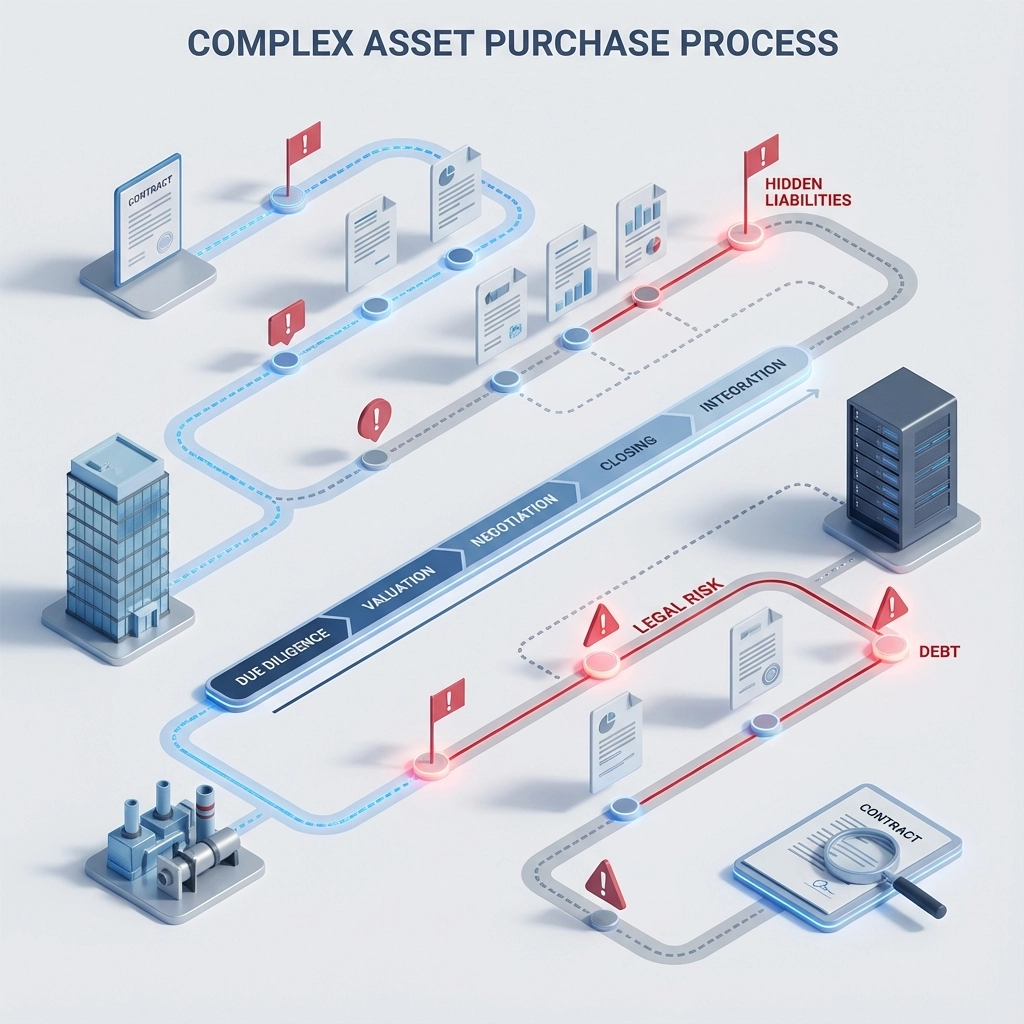
Here’s the thing most Main Street owners don’t realize: buying assets instead of buying the whole company should protect you from the seller’s debts and legal problems. But “should” is doing a lot of heavy lifting there. Courts have carved out so many exceptions to this rule that you can still get burned if you’re not careful.
Let me walk you through the real risks and show you exactly how to protect yourself.
What Hidden Liabilities Actually Look Like
When I say “hidden liabilities,” I’m not talking about mysterious accounting tricks. I’m talking about real-world problems that can sink your new business:
Environmental Issues: That manufacturing facility you bought? If the previous owner contaminated the soil or groundwater, you’re now responsible for cleanup: even if you had no idea. EPA doesn’t care that you “just bought the assets.”
Product Liability Claims: You acquire a small food manufacturer, and three months later someone gets sick from a product made before you took over. Guess who’s getting sued? (Hint: it’s you.)
Unpaid Taxes: The seller owed $50,000 in payroll taxes but “forgot” to mention it. Depending on how the deal was structured, you might be on the hook.
Ongoing Lawsuits: That slip-and-fall case from last year? If it involves the premises you just bought, it could become your problem.
Union Obligations: If you’re acquiring a business with unionized workers and you keep operating substantially the same way, you might inherit the collective bargaining agreement: and all its obligations.

The Sneaky Exceptions That Catch Owners
The law says asset buyers generally don’t inherit liabilities, but here are the exceptions that trip up smart business owners:
The “We Assumed It” Exception
- What it is: You explicitly agreed to take on certain debts, or your actions after closing suggest you accepted them
- Real example: You keep honoring the previous owner’s service contracts and warranties without modifying them
- The trap: Courts see this as evidence you assumed those obligations
The “Looks Like a Merger” Exception
- What it is: If your acquisition looks too much like buying the whole company, courts treat it that way
- Red flags: Same employees, same management, same business name, same location, seller company dissolves
- The result: You inherit ALL the seller’s liabilities, not just the assets
The “Secured Debt” Exception
- What it is: If the seller used equipment or real estate as collateral for loans, those security interests follow the assets
- The trap: Even if you didn’t know about the loan, you’re still responsible if it was properly filed
- Real example: You buy restaurant equipment worth $100,000, discover it secures a $60,000 loan you now have to pay
The “Fraudulent Transfer” Exception
- What it is: If the sale was designed to help the seller dodge creditors, you could inherit their debts
- Warning signs: Below-market sale price, seller facing financial distress, unusual transaction timing
- The consequence: Courts can “reverse” the asset sale and make you pay the seller’s creditors
Red Flags That Should Make You Pump the Brakes
Vague Contract Language: If the purchase agreement uses fuzzy terms like “ordinary course liabilities” without defining exactly what that means, you’re asking for trouble. Ambiguity always works against buyers.
Rushed Due Diligence: The seller wants to close in two weeks and discourages thorough document review? That’s not urgency: that’s desperation to hide something.
Missing Financial Records: “We don’t have records going back that far” is code for “we have problems we don’t want you to find.”
Ongoing Legal Issues: Any business being sued, investigated, or dealing with regulatory problems needs extra scrutiny. Those issues don’t magically disappear at closing.
Environmental Red Flags: Manufacturing, gas stations, dry cleaners, auto repair shops: any business that uses chemicals or generates waste carries environmental liability risk.
Industry-Specific Tips to Keep You Safe
Restaurants and Food Service
- Check for health department violations and pending citations
- Verify all liquor licenses transfer properly
- Review worker injury claims (kitchen accidents are common and expensive)
- Confirm all food safety certifications are current
Manufacturing and Industrial
- Order Phase I environmental assessment (and Phase II if needed)
- Review all regulatory compliance (OSHA, EPA, state agencies)
- Check for product recalls or liability claims
- Verify proper disposal of hazardous materials
Professional Services
- Review malpractice insurance and claims history
- Check professional licenses and continuing education requirements
- Verify client confidentiality agreements won’t be breached
- Confirm all professional liability issues are disclosed
Retail and Consumer-Facing
- Check for slip-and-fall claims and premises liability issues
- Review product liability exposure (especially if selling imported goods)
- Verify sales tax compliance in all relevant jurisdictions
- Check for Americans with Disabilities Act compliance issues
Healthcare and Medical
- Verify HIPAA compliance and patient privacy protections
- Review Medicare/Medicaid billing practices and compliance
- Check medical malpractice insurance and claims
- Confirm all professional licenses and certifications transfer
Don’t Sign Until You…
Here’s your pre-closing checklist to avoid hidden liability disasters:
✓ Complete Thorough Due Diligence
- Review 3+ years of financial statements
- Check all pending litigation and regulatory issues
- Order UCC searches to identify secured debts
- Verify all licenses, permits, and certifications
- For environmental risk businesses: order environmental assessment
✓ Draft Crystal-Clear Contract Terms
- Specify exactly which liabilities you’re NOT assuming
- List exactly which liabilities (if any) you ARE assuming
- Include detailed representations and warranties from seller
- Add indemnification provisions for hidden liabilities
- Set aside escrow funds to cover unknown issues
✓ Protect Yourself Legally
- Require seller to maintain insurance coverage for specified period
- Get personal guarantees from seller principals when appropriate
- Structure payment terms to protect against post-closing discoveries
- Include “baskets” and “caps” to limit your exposure to small claims
✓ Handle Secured Debts Properly
- Identify all liens and security interests on assets
- Require seller to pay off secured debts at closing, OR
- Get lender consent to assume debt with clear terms, OR
- Adjust purchase price to account for assumed debt
✓ Plan Your Post-Closing Operations
- Avoid operating “substantially similar” to previous owner if possible
- Change business name, procedures, and contracts when practical
- Document the differences between old and new operations
- Consider forming new entity to operate acquired assets

The Bottom Line
Asset purchases should protect you from seller liabilities, but only if you structure them correctly. The exceptions to this protection are real, and they catch unprepared buyers every day. A $150,000 restaurant acquisition can turn into a $300,000 nightmare if you inherit hidden environmental cleanup costs or ongoing litigation.
The good news? These problems are almost always preventable with proper planning, thorough due diligence, and experienced legal help. The cost of getting it right upfront is a fraction of what you’ll pay to fix it later.
Don’t let hidden liabilities turn your dream acquisition into a financial disaster. Know the risks, do the work, and protect yourself before you sign.
Thinking about acquiring a business? Contact us before you get too far down the road. We’ll help you structure the deal to avoid these hidden liability traps and keep your acquisition on track.
Disclaimer: This article provides general information and should not be considered legal advice. Every business sale situation is unique, and you should consult with qualified legal and financial professionals before making any major business decisions.
Ready to start the process? The team at Raetzer PLLC has helped numerous business owners successfully navigate the sale process. We can help ensure your legal documentation is bulletproof and your transaction structure protects your interests.


